G. polyhedra
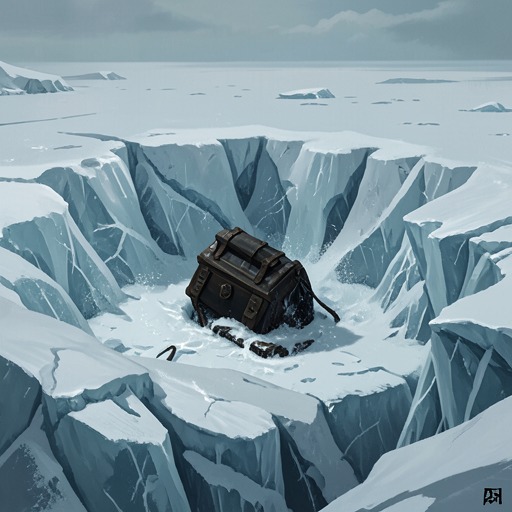
Deception PointG. polyhedra is a bioluminescent plankton whose appearance in the melt pool beneath the meteorite turns a puzzling glow into a crucial clue. It is not evidence of extraterrestrial life: its known capacity to live beneath ice shelves and hibernate in ice explains how it could reach the shaft, while the water’s brine and the plankton’s eventual death help reveal that the meteorite was inserted into the glacier recently.
Identification and Habitat
When the water in the shaft glows, Michael Tolland identifies the organisms in it as bioluminescent dinoflagellates. He cannot be certain without a microscope, but recognizes them as plankton from the phylum Pyrrophyta, whose name means fire plant. The Arctic Ocean is filled with such organisms. Their light therefore has a terrestrial explanation, even if their presence in a shaft beneath a meteorite buried in apparently fresh glacial ice remains unexplained.
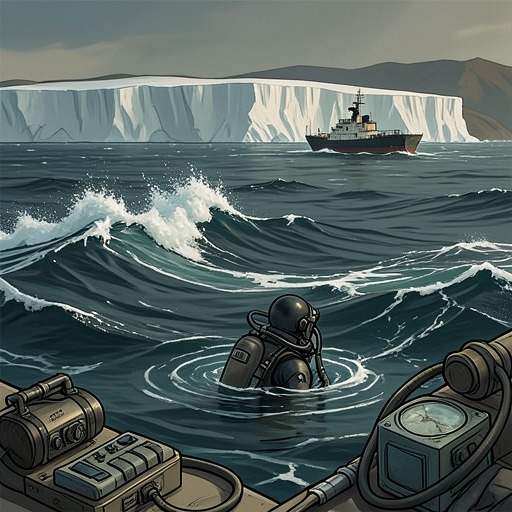
Norah Mangor provides the more specific identification: G. polyhedra, a plankton glaciologists commonly encounter in oceans beneath ice shelves. She confirms that it bioluminesces and can hibernate inside ice. Those properties make it plausible that the organisms could have survived in a frozen setting and later become active when the ice warmed. But the species’ normal habitat also sharpens the central problem: ocean plankton should not simply be present in a shaft supposedly surrounded by freshwater snowpack.
The Meltwater Test
Norah rejects the suggestion that the water is contaminated with saltwater plankton and takes a sample herself. Using a sterile pipette on a string, she draws water from the melt pool, puts several drops into a refractometer, and checks its reading. The instrument registers three percent brine. Norah considers the result impossible for a glacier formed from snow and initially suspects that the device is faulty.
She then examines the sample under a microscope. It contains G. polyhedra, but the organisms are dead. Norah explains that they could not survive for long in water with three percent salinity. The result joins two distinct observations: the shaft contains brine, and the plankton living in it are species associated with water beneath ice shelves. What had seemed an anomalous glow is now physical evidence about the environment inside the shaft.
Tolland connects the plankton’s ability to hibernate in ice with the apparently static water level in the shaft. Norah confirms that G. polyhedra can indeed lie dormant within ice. This answer helps explain how plankton could be present beneath the meteorite, but it does not vindicate the original account of the find. Instead, it gives the investigators a coherent mechanism for tracing the organisms’ path through the ice.
How the Plankton Expose the Hoax
Norah reconstructs that path from the plankton’s behavior. Phosphorescent dinoflagellates, she reasons, would have followed their instinct and swum upward into the meteorite shaft, becoming trapped and frozen just beneath the meteorite. When Norah heated the meteorite, the ice beneath it melted and released them. They swam upward again into the habisphere, where they eventually died because the surrounding water lacked the saltwater conditions they needed.
That sequence accounts for both the plankton’s emergence into the melt pool and the dead organisms in the sample. More importantly, it relocates the mystery: the plankton need not have come from space or entered pristine glacial ice by some unknown natural process. Their movement through the shaft indicates that seawater organisms were present in the ice where the meteorite was placed.
The geophysical evidence confirms the significance of the brine. Tolland notes that if PODS measured densities from space, the satellite could not distinguish brine ice from fresh ice at this level: a four-percent differential falls below its tolerance threshold. The distinction invisible to the satellite becomes legible at the site through the plankton and the water sample. The living trace exposes a condition the remote instrument could not resolve.
Tolland concludes that phosphorescent dinoflagellates would have entered the shaft, frozen beneath the meteorite, and been released when the ice was melted during the investigation. Norah’s GPR evidence then makes the consequence explicit: the meteorite was not part of the Jungersol Fall but had been inserted into the ice recently. Since the plankton would have died if they had been trapped there much longer, she dates the insertion to within the previous year. She packs the GPR equipment and insists that the team must alert others before the President presents the wrong data.
Narrative Significance
G. polyhedra is important not because it supplies a second extraordinary discovery, but because an ordinary organism changes the meaning of the first. Its light initially accompanies speculation about extraterrestrial organisms; its recognizable identity shifts attention toward Arctic plankton, and its particular habitat and response to brine turn that identification into a test of the meteorite’s provenance.
The clue also reveals a limit in the chain of interpretation. PODS can register density but cannot resolve the small difference between fresh and brine ice described here. The plankton, the salinity reading, and Norah’s GPR printout provide evidence at different scales: a biological trace, a direct water measurement, and a subsurface image. Together they overturn the claim that the meteorite was naturally embedded in ancient glacial ice. G. polyhedra’s brief appearance in the habisphere thus carries consequences far beyond the pool where it is found: it helps turn an apparent sign of alien life into evidence of a recent human deception.